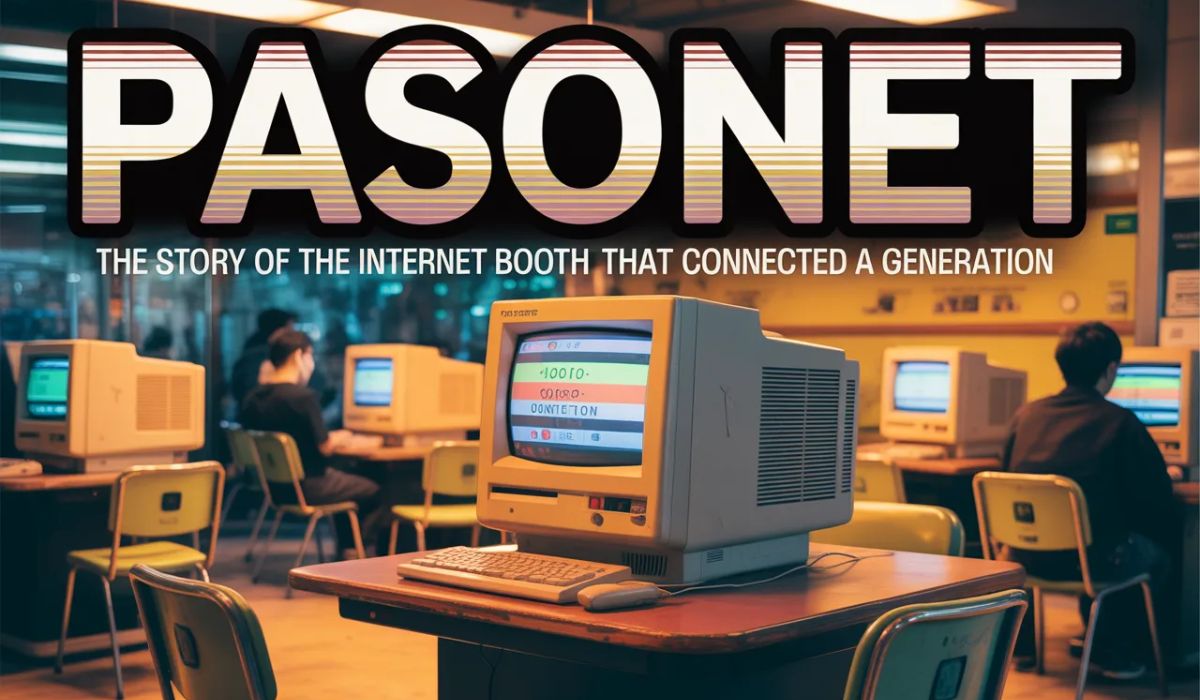
Have you ever heard of Pasonet? If not, don’t worry — you’re in for an interesting ride. This is more than just a word; it’s part technology, part cultural phenomenon, and part nostalgic memory for millions. In the Philippines, pasonet (often spelled pisonet because of the Filipino word piso meaning peso) once transformed the way people accessed the internet. It helped ordinary folks, students, professionals, and dreamers connect with the world — all through a coin‑operated computer booth. But the story doesn’t stop there. This article unpacks everything you need to know about pasonet — from its humble beginnings and social impact to its legacy and what it means today.
1. What Is Pasonet? A Simple Introduction
Imagine walking into a small booth on a busy street corner, dropping a peso into a coin slot, and suddenly you’re online — browsing, chatting, or doing school work. That was pasonet in a nutshell. It was a pay‑per‑use internet station, common in the Philippines from the late 1990s through the early 2010s. People paid a small amount — often one peso for a few minutes of access — to use a computer connected to the internet. These tiny hubs helped bridge the gap between those who couldn’t afford home broadband and the growing online world.
But pasonet wasn’t just convenient — it became a cultural touchpoint that defined a generation’s early experiences of digital life.
2. The Origins: How Coin‑Operated Internet Came to Be
To understand pasonet, we need to step back in time to a moment when internet access wasn’t everywhere. In the late 1990s and early 2000s, personal computers and home internet subscriptions were expensive luxuries in many parts of the Philippines. Broadband hadn’t spread widely yet, and mobile data was either slow or costly.
Enter the pasonet. Its name came from combining piso (the Philippine peso) and internet — literally “internet for a peso.” It offered an ingenious and affordable solution: people could access the internet only when they needed it, paying only for the time they used.
This idea was loosely inspired by arcade machines and public payphones — technology you only paid for when you used it.
3. How Pasonet Worked: Step by Step
The setup was surprisingly simple, yet clever:
- Booth or Kiosk Setup: A small enclosure with one or more computers connected to an internet line.
- Payment Mechanism: A coin machine (often coins only) connected to a timer that controlled access.
- User Interaction: When users inserted a peso, the timer activated the computer for a set duration — say 5 or 7 minutes. Once time ran out, the screen would lock until more money was inserted.
- Optional Add‑Ons: Some booths offered printing, scanning, or gaming for additional costs.
It was pay‑as‑you‑go, fast, and affordable — and even simple enough that high school students could figure it out on their own.
4. Who Used Pasonet and Why It Mattered
You might wonder: “Who actually used this? Wasn’t internet everywhere by then?” Not really.
Pasonet appealed to several groups:
- Students doing research or online assignments.
- Gamers who wanted to play online titles with friends.
- Jobseekers checking listings or sending resumes.
- Families communicating with loved ones abroad.
- Everyday people who simply wanted to browse or chat online.
In many communities, this was their first taste of the digital world — a moment when the internet stopped being a distant idea and became something real and accessible.
5. The Culture Around Pasonet: More Than Just Computers
Pasonet booths became gathering hubs. Imagine friends lining up after school, waiting for their turn on the computer. The atmosphere wasn’t sterile — it was social. People chatted about games, laughed over messages, and even helped each other learn how to navigate the web.
In some ways, pasonet was like a public living room — a place where digital exploration happened out in the open, not behind closed doors. It became part of daily life, especially for young Filipinos who were just discovering the web.
6. Pasonet as Micro‑Entrepreneurship
For many operators, pasonet wasn’t just a service — it was a business opportunity. Starting with low capital — often just a computer, internet connection, timer, and booth — entrepreneurs could earn a modest income. Locations near schools, markets, or busy streets meant steady traffic and steady income.
Some operators diversified: they added printing, scanning, and even wireless access, expanding their offerings and drawing more customers. In this way, pasonet contributed not only to digital access but also to local micro‑economies.
7. Challenges and Decline: Why It Faded Away
Like all technology, pasonet didn’t stay at its peak forever. Several forces worked against it:
- Smartphones and cheap mobile data made internet access portable and easy.
- Home broadband became more affordable and widespread.
- COVID‑19 lockdowns discouraged shared, public spaces.
- Regulations and safety concerns sometimes complicated operations.
As a result, these little booths slowly disappeared from streets and neighborhoods, replaced by mobile phones and personal devices that put the internet directly into your pocket.
8. The Legacy: How Pasonet Shaped Digital Life
You might ask, “Why does a coin‑operated booth from decades ago matter today?” The answer is simple: pasonet helped shape digital culture and accessibility.
For many Filipinos, it was the first place they:
- Learned to type.
- Sent their first email.
- Met friends online.
- Discovered the global web.
It wasn’t just a service — it was a gateway to the digital era. It lowered barriers, encouraged curiosity, and helped millions step into a connected world long before smartphones ruled.
9. Modern Perspectives: Has It Evolved?
Today, pasonet booths are rare. But the idea behind them — affordable, accessible connectivity — lives on. Innovative projects around the world continue exploring community internet access, shared Wi‑Fi, and low‑cost digital hubs. These modern interpretations aim to serve underserved communities — much like pasonet did in its prime.
Interestingly, some online content has mixed pasonet with unrelated platforms or even payment services — but those claims aren’t substantiated by public evidence. The original pasonet is best understood as the historical internet access model that truly existed.
10. What Pasonet Teaches Us About Digital Access
If pasonet were a lesson, it would teach us this: access matters more than technology alone. People don’t just need devices; they need affordable, inclusive pathways to use them. Pasonet gave people a chance — a tiny window into a much bigger world.
Like a small lamp in a dark room, it didn’t illuminate everything — but it showed the way forward.
- Future Possibilities: Could It Come Back?
Could pasonet make a comeback? In form, it’s unlikely. But in spirit? Absolutely.
Imagine community hubs with high‑speed connectivity, shared digital tools, printing stations, charging docks, and learning resources — all available under one roof. That’s the essence of what pasonet pioneered: shared, accessible connectivity for everyone. And that idea could continue in new forms, especially in underserved parts of the world.
12. Conclusion: Why Pasonet Still Matters
Pasonet wasn’t just a quirky innovation — it was a bridge. It connected people with information, opportunities, friends, and endless possibilities. For those who used it, those minutes online weren’t just time logged — they were moments of discovery. Whether for school, work, play, or connection, these little coin‑operated booths gave people a foothold in the digital era.
And even if they now seem like a relic, the legacy of pasonet lives on in every connectivity initiative that strives to make the internet accessible to all.
Frequently Asked Questions (FAQs)
- What does “pasonet” mean?
It’s a term used in the Philippines to describe coin‑operated internet booths where users pay per minute to access the web. - Why was pasonet popular?
It made internet access affordable for people who couldn’t afford home broadband or mobile data at the time. - What could people do on pasonet computers?
Users browsed websites, sent emails, chatted, played games, researched for school, and more. - Are pasonet booths still around?
They’ve mostly disappeared due to the rise of smartphones and cheap mobile connectivity, though a few still exist in remote areas. - Did pasonet influence digital culture?
Yes. It introduced many people to the internet and helped build digital skills that shaped online participation.